
This article was originally published in the Press Democrat
By Rose L. Snyder | Rose L. Snyder is director of community engagement at Point Blue Conservation Science.
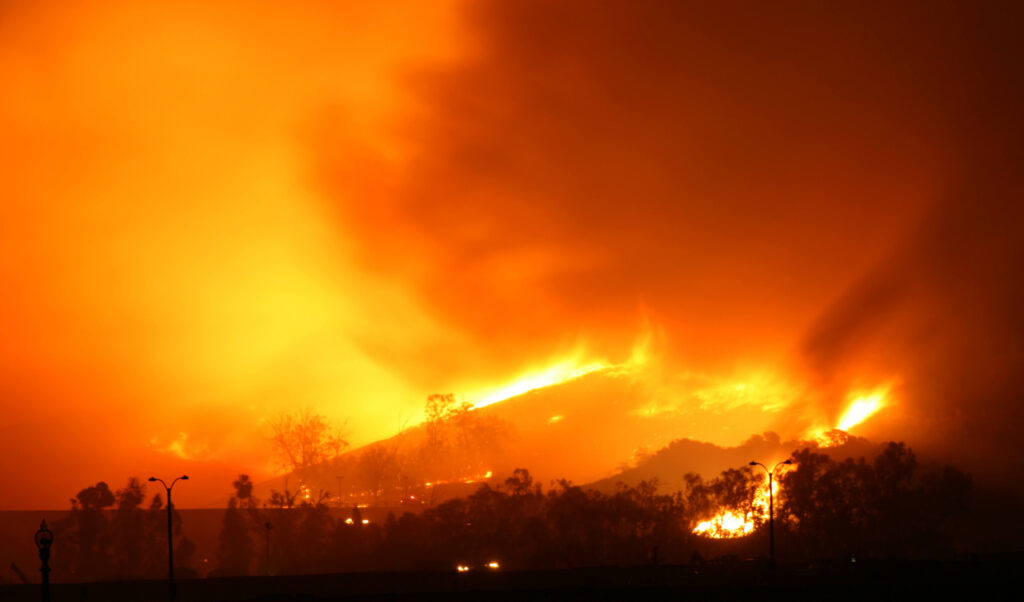
In 2015, I evacuated through smoke and falling ash and ultimately lost my home as the Valley Fire tore through Middletown. Having relocated to Sonoma County, I lost another home to the Nuns Fire, one of three wildfires that destroyed nearly 7,000 structures in October 2017.
As many Californians are acutely aware, we are increasingly experiencing the consequences of changing environmental conditions — increased heat events, smoke-filled summers, threats to clean water and rising public health threats from pollution and climate-driven disasters.
Researchers at universities and organizations like Point Blue Conservation Science work every day to better understand how our environment is changing and what land stewards can do to support a resilient and healthy future for people and wildlife. But the critical conservation is at risk.
Over the past year, the federal government has significantly reduced funding for scientific research across a wide range of disciplines despite overwhelming bipartisan support for government investments in scientific research. According to a Pew Research Center report, 84% of Americans (including 93% of Democrats and 76% of Republicans) believe that it is worthwhile for the U.S. government to fund research. Yet as of January, more than 7,800 federal research grants have been frozen or terminated, with proposed budget cuts to scientific research totaling roughly $32 billion.
After experiencing firsthand how destructive climate-fueled disasters can be, I now work alongside researchers and land stewards working to reduce those risks. In this role, I have seen the negative impacts of the science funding cuts. For example, one collaborative multiyear research project supporting climate resilience on agricultural lands was abruptly terminated in 2025 when the U.S. Department of Agriculture’s canceled its Partnerships for Climate-Smart Commodities.
Along with staff furloughs and funding uncertainties that ensued, critical work to ensure farmers and ranchers can adapt to worsening drought and climate pressures was halted.
As a global biodiversity hotspot, the state of California is a leader not only in advancing ecological and climate science, but also in implementing strong environmental solutions. With significant decreases in federal investments, it is critical that California responds in order to remain at the forefront of cutting-edge conservation and climate research that supports people and wildlife.
The California Science and Health Research Bond Act, currently moving through the legislative process, was designed to fill this gap. If passed, the bill — SB 895— would place a $12 billion bond measure on the November ballot to advance critical scientific research to improve conditions for all Californians. If approved, these funds would support direct human health research such as cancer research as well as climate and conservation research.
Shifting climate patterns increase human health impacts from conditions such as extreme heat exposure and wildfire smoke. These changes also increase opportunities for a rise in infectious diseases. Too often it is rural and disadvantaged communities that suffer most from environmental health hazards.
The fires that displaced my family were not isolated events. As wildfire seasons grow longer and more destructive, California is increasingly dependent on critical climate and environmental research to help communities adapt. This research helps land managers adopt nature-based solutions that improve air and water quality, sequester carbon and other greenhouse gases, reduce fuel loads, increase drought resilience and protect our communities from catastrophic fire.
For example, Point Blue Conservation Science’s research on agricultural lands helps farmers and ranchers track how management practices influence ecological outcomes such as soil health and biodiversity. This information supports stewardship actions that increase plant productivity, drought resilience and water quality — resulting in not only increased health and resilience for the local ecosystems and human communities but also in increased economic resilience for farmers and ranchers.
This work demonstrates why investing in rigorous scientific research is essential for guiding policies and actions that protect California’s landscapes and communities.
As someone who has twice lost a home to wildfire, I know firsthand that the impacts of a changing environment are already here. Californians need science-backed stewardship and conservation solutions to help protect our water, landscapes and communities from increasingly severe environmental threats. Investing in science through the California Science and Health Research Bond Act is investing in safer, healthier and more resilient communities.
Rose L. Snyder is director of community engagement at Point Blue Conservation Science, which is based in Petaluma.